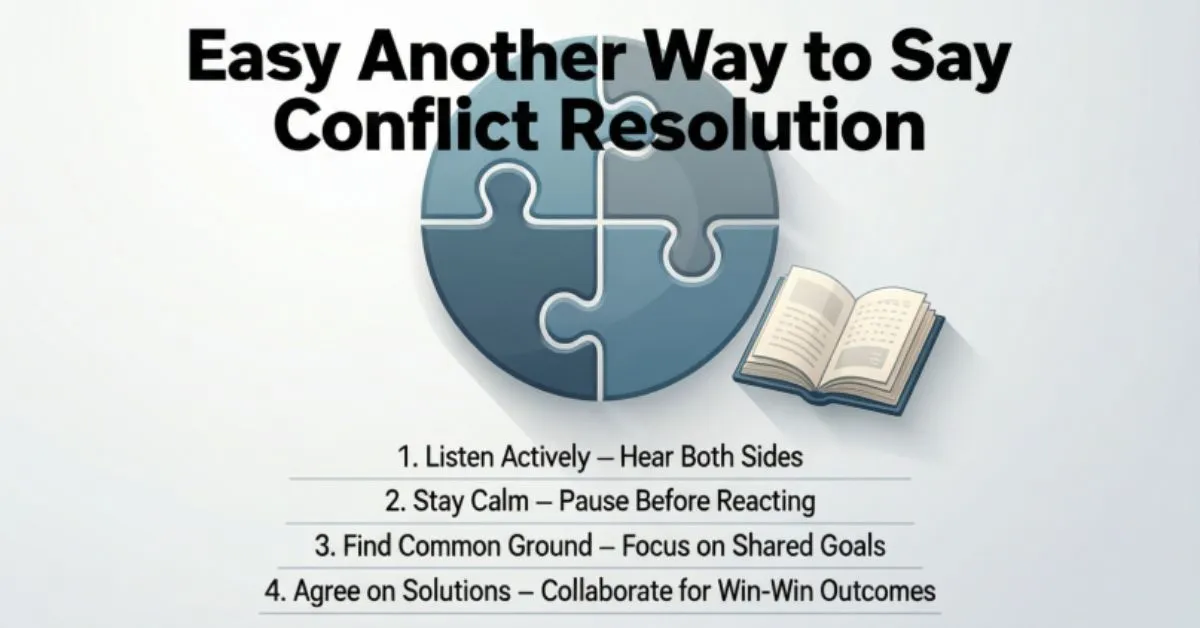
Conflict is part of life. If at work, home, or with friends, disagreements happen. How we handle them matters. Choosing the right words can calm tension, show maturity, and help everyone feel understood.
Instead of always saying conflict resolution, there are plenty of creative, practical alternatives that can make communication smoother and more approachable. Today, we’ll explore over 100 ways to express conflict resolution across different contexts.
Mediation in the Workplace
At work, conflicts can harm teamwork, morale, and productivity. Using alternative terms can make conversations feel less formal and more collaborative. Here are some ways to describe conflict resolution at work:
- Problem solving
- Issue management
- Workplace harmony
- Team alignment
- Dispute handling
- Situation management
- Work disagreement solution
- Negotiation process
- Team mediation
- Collaborative resolution
- Finding middle ground
- Constructive dialogue
- Solution-oriented discussion
- Workplace reconciliation
- Organizational healing
- Issue reconciliation
- Professional compromise
- Conflict management strategy
- Relationship mending
- Peacebuilding
These terms make the workplace sound cooperative and solution-focused, reducing defensiveness and promoting teamwork.
Family and Relationship Conflicts
At home or in personal relationships, the tone needs warmth and empathy. Words that feel gentle and inclusive work best. Alternatives include:
- Heart-to-heart conversation
- Finding common ground
- Healing differences
- Relationship repair
- Family mediation
- Peaceful negotiation
- Emotional reconciliation
- Harmonious discussion
- Understanding conversation
- Problem talking through
- Settling disagreements
- Love-centered resolution
- Conflict repair
- Rebuilding trust
- Family dialogue
- Peaceful compromise
- Bridging gaps
- Talking it out
- Resolving tension
- Reconciliation strategy
These phrases show care and encourage connection instead of creating distance.
Humor and Creative Approaches
Sometimes a light-hearted tone works best, especially with friends or casual conflicts. Humor can diffuse tension while still resolving issues. Consider:
- Drama detox
- Chill talk
- Peace pow-wow
- Friendly fix
- Squabble squash
- Grudge purge
- Tiff tidy-up
- Mood mending
- Spat spatula (playful way to smooth things over)
- Banter balance
- Harmony hack
- Calm the chaos
- Smile negotiation
- Friendly patch-up
- Disagreement defuser
- Joke mediation
- Laugh it off session
- Tiny quarrel cure
- Chill reconciliation
- Funky conflict fix
Adding humor helps everyone approach the situation with an open mind and a lighter heart.
Quick Fix Alternatives
Sometimes readers want short, concise ways to describe conflict resolution without a long explanation. Quick phrases include:
- Solve it
- Clear the air
- Fix it
- Make peace
- Smooth things over
- Mend fences
- Settle it
- Reach agreement
- Work it out
- Harmonize
- Patch things up
- Ease tension
- Make amends
- Compromise
- Calm the situation
- Resolve
- Agree
- Reconcile
- Find peace
- Balance
These brief terms work perfectly in casual conversation or fast-paced environments.
Conflict Resolution in Leadership
Leaders often need to frame conflict resolution positively. These alternatives make their approach sound proactive and professional:
- Strategic negotiation
- Leadership mediation
- Organizational alignment
- Decision facilitation
- Team cohesion
- Dispute settlement
- Executive problem solving
- Authority-driven compromise
- Conflict coaching
- Professional diplomacy
- Leadership intervention
- Consensus building
- Guidance discussion
- Leadership dialogue
- Resolution strategy
- Conflict coaching session
- Managerial mediation
- Workplace peace initiative
- Collaborative leadership
- Executive reconciliation
Using these phrases positions leaders as facilitators instead of enforcers.
Conflict Resolution in Education
Teachers, counselors, and students can benefit from approachable, supportive terms:
- Peer mediation
- Classroom harmony
- Student reconciliation
- Problem-solving circle
- Learning negotiation
- Issue clarification
- Peace talk
- Conflict coaching
- Collaborative discussion
- Respectful dialogue
- Restorative conversation
- Mutual understanding session
- Teacher mediation
- Group resolution
- Harmony-building
- Student compromise
- Conflict awareness
- Agreement facilitation
- Communication bridge
- School problem solving
These alternatives create a safe and supportive environment for young learners.
Conflict Resolution in Legal or Formal Settings
In legal, governmental, or formal contexts, clarity and professionalism are key:
- Dispute resolution
- Legal mediation
- Arbitration
- Negotiation process
- Settlement facilitation
- Disagreement management
- Issue adjudication
- Formal reconciliation
- Litigation alternative
- Conflict adjudication
- Contract mediation
- Legal settlement
- Regulatory compliance resolution
- Official negotiation
- Policy alignment
- Civil resolution
- Formal dispute handling
- Contract resolution
- Court-adjacent mediation
- Binding compromise
These terms maintain authority and professionalism while avoiding casual tone.
Conflict Resolution in Customer Service
When managing customer disputes, wording can make the difference between calm and escalation:
- Service recovery
- Problem handling
- Customer care mediation
- Issue resolution
- Complaint management
- Satisfaction solution
- Resolution facilitation
- Client negotiation
- Conflict handling
- Service reconciliation
- Customer problem solving
- Calm conversation
- Feedback mediation
- Client harmony
- Complaint resolution
- Service repair
- Quick fix session
- Solution provision
- Concern settlement
- Friendly resolution
These terms communicate empathy, competence, and quick action.
Conflict Resolution for Personal Growth
Sometimes conflict resolution is about self-improvement and emotional intelligence:
- Inner peace work
- Personal reconciliation
- Emotional clarity
- Self-mediation
- Mindful resolution
- Internal negotiation
- Anger management
- Forgiveness practice
- Reflective problem solving
- Stress easing
- Calm approach
- Personal compromise
- Self-reflection session
- Emotion management
- Mental harmony
- Stress resolution
- Mood balancing
- Personal negotiation
- Relationship repair practice
- Self-growth resolution
These phrases help readers focus on learning and growth.
Conflict Resolution in Team Sports
Sports teams face tension both on and off the field. These alternatives fit competitive environments:
- Team strategy alignment
- Player mediation
- Locker room peace
- Game plan compromise
- Coach-led resolution
- Teammate reconciliation
- Playbook problem solving
- Teamwork harmony
- Sports negotiation
- Disagreement handling
- Friendly match resolution
- Squad discussion
- On-field conflict management
- Locker room talk
- Athletic compromise
- Player communication session
- Coaching intervention
- Rivalry resolution
- Match harmony
- Sportsmanship mediation
These phrases emphasize teamwork and collaboration rather than blame.
Conflict Resolution in Creative Projects
Artists, writers, and creatives often need flexible, imaginative solutions:
- Idea blending
- Collaborative compromise
- Brainstorm reconciliation
- Creative negotiation
- Vision alignment
- Artful mediation
- Design discussion
- Concept resolution
- Team harmony session
- Collaborative solution
- Creative peace talk
- Problem-solving jam
- Idea adjustment
- Artistic reconciliation
- Project compromise
- Collective decision making
- Creative conflict handling
- Imaginative problem solving
- Mood alignment
- Vision compromise
This approach highlights collaboration and shared vision.
Conflict Resolution in Technology Teams
Tech teams benefit from clear, precise alternatives, especially in high-pressure environments:
- Bug resolution
- Code conflict handling
- Merge conflict resolution
- Issue debugging
- Technical reconciliation
- Problem triage
- System alignment
- Team coordination
- Solution deployment
- Software mediation
- Error compromise
- Sprint reconciliation
- Agile problem solving
- DevOps negotiation
- Collaborative patching
- Code review resolution
- Workflow mediation
- Sprint adjustment
- Technical compromise
- Project synchronization
These options are practical and tech-friendly.
Conflict Resolution in International or Cross-Cultural Contexts
For global teams, diplomacy and cultural sensitivity matter:
- Cross-cultural mediation
- Global negotiation
- Diplomatic resolution
- International compromise
- Cultural reconciliation
- Peaceful collaboration
- Multinational dialogue
- Harmony facilitation
- Conflict bridge
- Cultural sensitivity solution
- World teamwork alignment
- Global dispute handling
- International understanding session
- Collaborative diplomacy
- Cross-border problem solving
- Relationship management
- Intercultural agreement
- Cultural problem handling
- Global compromise
- Respectful negotiation
These terms emphasize understanding, respect, and cooperation.
Tips for Using Alternatives to Conflict Resolution
- Adjust tone: Match the term to the context. Workplace settings may need professional phrases, while friends benefit from humor.
- Time it right: Use resolution phrases when tensions are low to encourage calm and productive dialogue.
- Keep it simple: Choose short, clear phrases for casual or urgent situations.
- Blend words with action: Saying harmony building is only half the work—follow through with practical steps.
- Read the room: Cultural and personal differences affect how people perceive conflict language.
Conclusion
Conflict is inevitable, but how we talk about it makes a difference. From workplaces to homes, from playful banter to serious legal disputes, using a variety of alternatives to conflict resolution helps tailor your approach, build trust, and create more effective outcomes.
Remember to choose the term that matches your audience, context, and personality. Next time you face a disagreement, try one of these alternatives and see how it changes the conversation. Which one fits your style best?
Discover More Article
- Another way to say extensive experience that stands out 🚀 (2026)
- 💼 Discover Another Way to Say I Have Experience Today (2026)
- 🧠 Master Another Way to Say Problem Solving Skills 🛠️ Easily (2026)

Oscar Wilde is a passionate writer with 7 years of experience, specializing in English grammar and effective replies. At respnseto.com, he shares practical tips, insights, and engaging content to help readers communicate clearly and confidently. His work blends expertise with a friendly, approachable style for all audiences.