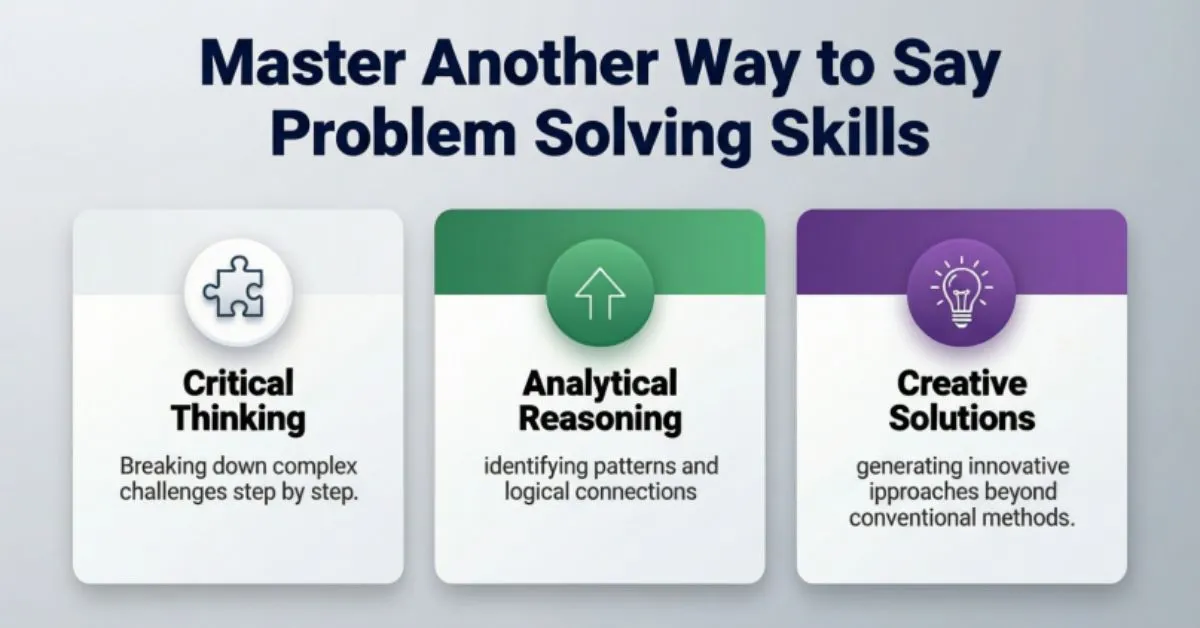
Problem solving skills are one of the most valuable abilities you can have, whether in work, school, or everyday life. But sometimes, saying problem solving skills over and over can feel repetitive.
Learning different ways to express this idea not only makes your writing and speech more engaging but also highlights your creativity and versatility.
Using alternative phrases for problem solving skills can help you stand out in job applications, resumes, interviews, emails, and even casual conversations.
Employers love seeing diverse ways to describe your abilities. Friends and colleagues notice when you communicate in a fresh, confident style.
In this post, we will explore multiple contexts where you can use different ways to say problem solving skills. You will get practical examples, creative ideas, and quick tips that you can apply immediately.
Analytical Thinking
Analytical thinking focuses on your ability to break down complex problems, examine all parts, and make informed decisions.
- Critical thinking
- Logical reasoning
- Investigative skills
- Data analysis
- Evaluative thinking
- Strategic analysis
- Decision-making ability
- Systems thinking
- Root cause analysis
- Pattern recognition
- Insight generation
- Information synthesis
- Diagnostic ability
- Reasoned judgment
- Thoughtful deliberation
- Conceptual analysis
- Problem assessment
- Situational evaluation
- Objective reasoning
- Methodical thinking
Analytical thinking is often highlighted in roles like business analysis, research, or technical positions. Using these alternatives shows that you approach challenges with precision and careful evaluation.
Creative Solutions
Creative solutions focus on innovation and thinking outside the box. They are especially relevant for marketing, design, or entrepreneurship roles.
- Innovative thinking
- Imaginative solutions
- Original idea generation
- Brainstorming ability
- Adaptive thinking
- Visionary thinking
- Conceptual creativity
- Design thinking
- Ideation skills
- Lateral thinking
- Inventive strategies
- Creative problem tackling
- Out-of-the-box thinking
- Idea development
- Artistic reasoning
- Solution-oriented creativity
- Flexible thinking
- Creative insight
- Concept innovation
- Transformative thinking
Highlighting creativity communicates that you can approach problems in unique and unexpected ways, making you a valuable contributor to team projects or business growth.
Everyday Life Applications
Sometimes problem solving skills are just practical life skills. Humor, creativity, or emotional intelligence can make everyday problem solving enjoyable.
- Quick thinking
- Resourcefulness
- Street smarts
- Life hacking
- Improvisation
- Common sense reasoning
- Adaptability
- Practical judgment
- Social problem solving
- Conflict resolution
- Emotional intelligence
- Negotiation skills
- Mediation ability
- Decision agility
- Crisis management
- Coping strategies
- Risk assessment
- Time management
- Initiative
- Hands-on solutions
Think about handling unexpected situations, like fixing a broken appliance, resolving a misunderstanding with a friend, or planning a last-minute event. These skills make life smoother and even fun.
Short and Simple Alternatives
Sometimes you want quick, concise ways to say problem solving skills. These are perfect for resumes, LinkedIn profiles, or casual mentions.
- Troubleshooting
- Problem handling
- Solution finding
- Issue resolution
- Fixing problems
- Decision-making
- Strategic thinking
- Analytical skills
- Innovative solutions
- Critical thinking
- Solution-oriented
- Quick thinking
- Adaptive skills
- Insightful solutions
- Brainpower
- Conflict handling
- Practical solutions
- Logical solutions
- Creative fixes
- Resolution skills
These short alternatives are punchy, easy to read, and effective when space is limited or you want to make a quick impression.
Workplace Collaboration
Problem solving skills often shine in teamwork and collaborative environments.
- Team problem solving
- Group decision making
- Collaborative solutions
- Conflict resolution
- Consensus building
- Cooperative thinking
- Peer-to-peer problem handling
- Shared ideation
- Joint troubleshooting
- Cross-functional solutions
- Team-based innovation
- Co-creative thinking
- Collective analysis
- Interpersonal problem tackling
- Workplace mediation
- Project problem management
- Collaborative strategy
- Partnership problem solving
- Synergistic solutions
- Cooperative troubleshooting
Showing that you can solve problems as part of a team emphasizes communication, empathy, and collaboration.
Leadership Context
Leaders need to solve problems efficiently, often under pressure.
- Strategic problem solving
- Decision leadership
- Executive judgment
- Crisis management
- Operational problem solving
- Leadership reasoning
- Conflict mediation
- Organizational troubleshooting
- Directive solutions
- Visionary problem tackling
- Resource management
- Risk management
- Priority setting
- Tactical thinking
- Executive solutions
- Management decision-making
- Problem resolution leadership
- Performance optimization
- Team guidance
- Solution-oriented leadership
Leaders who articulate problem solving differently show their ability to guide others and make impactful decisions.
Technology and IT
In tech, problem solving is often technical, analytical, and highly specialized.
- Debugging skills
- Algorithmic thinking
- Systems troubleshooting
- Code analysis
- Technical problem solving
- IT issue resolution
- Software diagnostics
- Network problem handling
- Database problem solving
- Cybersecurity troubleshooting
- Technology optimization
- Digital solutions
- Process automation
- Computational problem solving
- Bug fixing
- Performance tuning
- Technical reasoning
- System evaluation
- Operational troubleshooting
- Code logic analysis
Using the right terminology in tech-focused roles shows your competence and familiarity with the field.
Academic Applications
Problem solving in education often involves structured learning, research, and reasoning.
- Research analysis
- Mathematical reasoning
- Scientific problem solving
- Conceptual understanding
- Critical evaluation
- Hypothesis testing
- Experimental reasoning
- Academic troubleshooting
- Data interpretation
- Cognitive skills
- Learning strategies
- Analytical research
- Theoretical problem solving
- Study skills
- Educational reasoning
- Concept mastery
- Evidence-based solutions
- Academic critical thinking
- Problem exploration
- Knowledge application
These alternatives work well in academic resumes, research papers, or teaching contexts.
Entrepreneurship
Entrepreneurs face unique challenges and opportunities for creative problem solving.
- Business problem solving
- Startup strategy
- Innovation leadership
- Market solutions
- Product development problem solving
- Opportunity analysis
- Risk assessment
- Venture troubleshooting
- Operational innovation
- Growth hacking
- Resource allocation solutions
- Strategic innovation
- Competitive problem solving
- Entrepreneurial thinking
- Adaptive business solutions
- Idea implementation
- Business optimization
- Challenge navigation
- Customer problem solving
- Revenue problem tackling
Entrepreneurs who use varied language to describe problem solving sound dynamic, versatile, and ready for action.
Emotional Intelligence and Soft Skills
Problem solving isn’t always technical. Emotional intelligence and empathy often guide solutions.
- Empathetic problem solving
- Conflict resolution
- Interpersonal negotiation
- Emotional decision making
- People-focused solutions
- Relationship management
- Understanding perspectives
- Mediation skills
- Compassionate problem handling
- Communication problem solving
- Active listening solutions
- Team harmony facilitation
- Emotional problem handling
- Adaptive interpersonal solutions
- Soft skill problem tackling
- Relationship optimization
- Sensitivity-driven solutions
- Collaborative emotional intelligence
- Peer conflict handling
- Emotional reasoning
These alternatives highlight your ability to solve problems in human-centered contexts.
Career Growth and Development
Problem solving skills help you grow professionally.
- Professional adaptability
- Skillful decision making
- Career strategy problem solving
- Goal-oriented solutions
- Opportunity navigation
- Initiative taking
- Learning agility
- Professional troubleshooting
- Strategic growth planning
- Mentorship problem solving
- Developmental reasoning
- Promotion strategy solutions
- Productivity improvement
- Professional insight
- Challenge handling
- Career problem tackling
- Leadership skill solutions
- Job performance enhancement
- Adaptability in challenges
- Professional reasoning
Showing your problem solving ability in terms of growth signals ambition and forward-thinking.
Customer Service
Problem solving in customer service emphasizes empathy and solutions.
- Client problem resolution
- Customer issue handling
- Service troubleshooting
- Complaint resolution
- Customer satisfaction solutions
- Service strategy problem solving
- Client-focused solutions
- Responsive decision making
- Feedback problem handling
- Service innovation
- Conflict mediation
- Complaint management
- Client care solutions
- Customer-first problem solving
- Service improvement strategies
- Quick resolution skills
- Satisfaction optimization
- Customer communication problem solving
- Client relationship management
- Service issue tackling
These phrases resonate in resumes, customer service training, or professional communication.
Tips Section
- Match the phrase to the context. Use technical terms for IT jobs and human-centered alternatives for customer service.
- Keep it concise in resumes but elaborate in interviews or writing samples.
- Adjust tone depending on audience; use creativity for casual communication and professionalism for workplace documents.
- Combine multiple alternatives in one sentence for variety without redundancy.
- Use active verbs like resolving, troubleshooting, or innovating to make phrases more dynamic.
Conclusion
Finding another way to say problem solving skills gives you flexibility in communication. Whether you’re writing a resume, leading a team, solving technical issues, or navigating personal challenges, these alternatives allow you to show your abilities in diverse and engaging ways.
Apply them according to your personality, context, and audience to make a stronger impression. Which of these alternatives will you try in your next resume or conversation?

I am Agatha Christie, a passionate writer with 3 years of experience crafting clear and engaging content. I specialize in English grammar and reply guidance. Through my work on respnseto.com, I aim to help readers improve communication skills, understand language better, and confidently express themselves online.