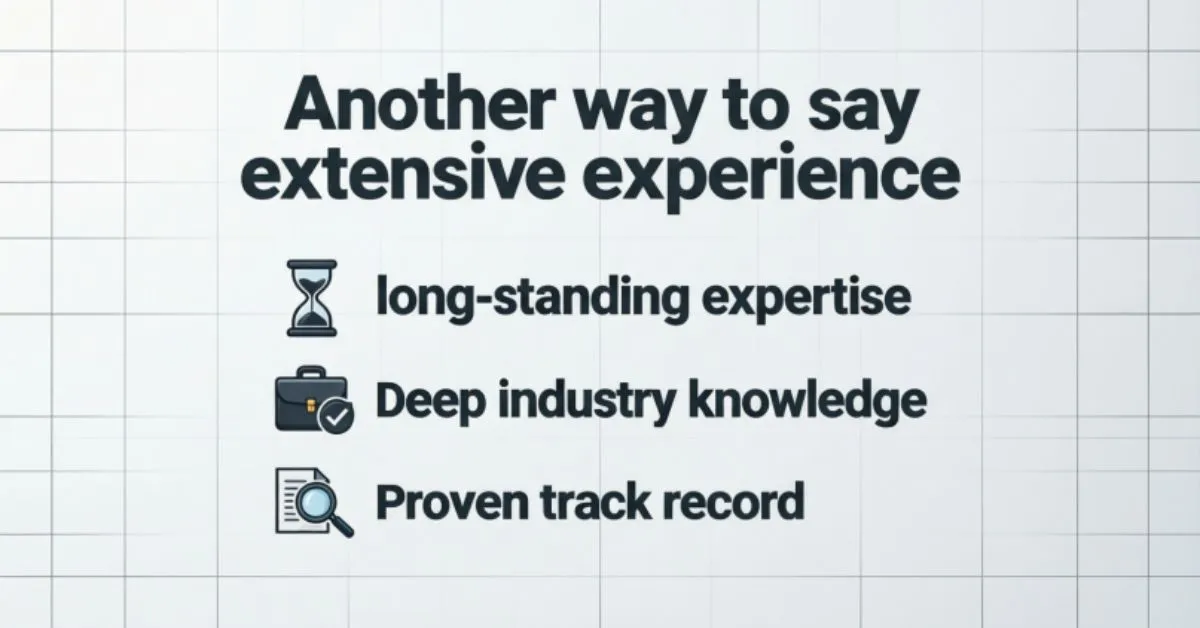
Words shape how people see you. When you describe your skills, background, or career, the phrases you choose can either lift you up or make you blend in. One phrase that many people overuse is extensive experience.
While it is not wrong, it has become tired, vague, and easy to ignore. Recruiters, clients, and readers see it every day, which means it often fails to impress.
Learning another way to say extensive experience helps you sound more confident, more human, and more specific. It shows that you understand your value and can communicate it clearly.
If you are writing a resume, updating LinkedIn, pitching a client, or creating content, the right words make your experience feel real and earned.
In this guide, you will find practical alternatives organized by context. Each section helps you choose the best wording for your situation so your experience stands out instead of fading into the background.
Professional and Resume Context: Showing Depth Without Sounding Repetitive
In resumes and cover letters, clarity matters more than fancy words. Hiring managers want to quickly understand how deep your experience goes. Instead of repeating extensive experience, these alternatives show skill, time, and growth in a natural way.
- Proven professional background
- Strong industry experience
- Deep field knowledge
- Years of hands-on work
- Well-established expertise
- Broad professional exposure
- Long-term career experience
- Advanced practical skills
- Solid performance record
- Comprehensive work history
- Demonstrated professional ability
- In-depth role understanding
- Seasoned career background
- Senior-level experience
- Extensive hands-on practice
- Career-built expertise
- Advanced industry knowledge
- Professional mastery over time
- Strong command of core skills
- Well-rounded professional experience
- Consistent career development
- Experience gained through long-term roles
- Field-specific knowledge base
These phrases help you sound confident without exaggeration. They also make your resume easier to scan and more believable to employers.
Business, Freelance, and Client-Facing Use: Building Trust and Authority
When working with clients, your language should build trust. Clients want to know that you can deliver results, not just talk about experience in abstract terms. These alternatives feel more practical and reassuring.
- Years of real-world experience
- Client-proven expertise
- Trusted professional background
- Experience built through projects
- Hands-on business knowledge
- Results-focused experience
- Practical industry insight
- Experience shaped by client work
- Skills tested in real situations
- Professional experience that delivers
- Knowledge gained through practice
- Experience refined over time
- Experience backed by outcomes
- Field-tested professional skills
- Applied business expertise
- Experience across diverse clients
- Real project-based experience
- Experience grounded in results
- Work-driven professional knowledge
- Experience built through problem-solving
- Industry experience clients trust
- Experience earned through consistent delivery
These options help clients feel confident choosing you because your experience sounds real, useful, and dependable.
Creative, Casual, or Emotional Tone: Making Experience Sound Human
Not every situation calls for formal wording. Blogs, interviews, personal bios, and social posts often benefit from warmer language. These alternatives add emotion, personality, and storytelling to your experience.
- Years in the field
- Time-tested know-how
- Learned by doing the work
- Experience built over a long journey
- Wisdom earned through effort
- Lessons learned the hard way
- Skills shaped by challenges
- Experience grown over time
- Knowledge gained through trial and error
- A long path of learning
- Experience formed through real work
- Hands-on lessons from daily practice
- Skills sharpened year by year
- Experience that came with patience
- Growth through real responsibility
- Experience built one task at a time
- Hard-earned professional insight
- Experience backed by real stories
- Learning through lived experience
- Experience shaped by both wins and losses
- A career full of learning moments
- Experience developed through persistence
These phrases help people connect with your story and understand that your experience comes from effort, not shortcuts.
Short, Simple, and Powerful Options: When Less Is More
Sometimes you need quick wording for a headline, summary, or bio. These short options save space while still communicating depth and skill.
- Highly experienced
- Seasoned professional
- Deeply skilled
- Well-practiced expert
- Industry veteran
- Skilled professional
- Expert-level background
- Strong experience base
- Long-term practitioner
- Field specialist
- Advanced experience
- Proven expertise
- Experience-rich background
- Knowledgeable expert
- Well-versed professional
- Expert practitioner
- Experience-driven specialist
- Senior-level professional
- Practice-based expert
- Skilled veteran
- Experience-backed professional
- Career-tested expert
These options are ideal when you want impact without extra explanation.
Academic, Technical, and Specialized Fields: Showing Expertise Clearly
In academic or technical settings, precision matters. These alternatives help communicate depth without sounding exaggerated or unclear.
- Advanced subject knowledge
- Specialized field experience
- Research-driven expertise
- Technical mastery
- Domain-specific experience
- Extensive applied knowledge
- Field-focused professional background
- Analytical experience base
- Experience supported by study
- Method-driven expertise
- Long-term subject involvement
- Technical problem-solving experience
- Evidence-based professional knowledge
- Structured field experience
- Expertise developed through research
- Practical application experience
- Advanced technical understanding
- Experience within specialized systems
- Theory-to-practice experience
- Experience grounded in methodology
These phrases are useful for academic CVs, research profiles, and technical documentation.
Leadership and Management Context: Communicating Authority Without Ego
Leaders must show experience without sounding controlling or arrogant. These alternatives balance confidence and approachability.
- Leadership experience developed over time
- Experience guiding teams
- Long-term management background
- Experience leading projects
- People-focused leadership experience
- Experience built through responsibility
- Strategic leadership background
- Decision-making experience
- Experience managing complex tasks
- Team-driven leadership experience
- Experience supporting growth
- Leadership shaped by challenges
- Experience earned through accountability
- Operational leadership background
- Experience coordinating teams
- Management experience across roles
- Experience directing outcomes
- Leadership experience rooted in practice
- Experience balancing people and goals
- Experience developed through trust
Tips for Using Alternatives to Extensive Experience
- Choose clarity over fancy language
Simple words make your experience easier to trust and understand. - Match the tone to the situation
Formal roles need polished wording, while creative spaces allow warmth. - Support your words with proof
Add results, years, or achievements when possible. - Avoid repeating the same phrase
Rotate language to keep writing fresh and engaging. - Stay honest and natural
The best phrase is the one that truly fits your journey.
Conclusion
Your experience is valuable, but how you describe it makes all the difference. Replacing extensive experience with clearer, more thoughtful language helps you sound confident, capable, and real. The key is context. A resume needs structure, a client pitch needs trust, and a personal story needs warmth.
Use these alternatives as tools, not rules. Pick the phrases that match your voice and your goals. Try a few, adjust the tone, and see how your message becomes stronger and more memorable.
Which phrase fits your style best? Start using it today and let your experience speak clearly.

John Milton is a passionate writer with 3 years of experience, specializing in English grammar and content replay strategies. He runs respnseto.com, where he shares insightful tips, guides, and practical advice to help readers improve their writing skills and master the art of effective communication online.