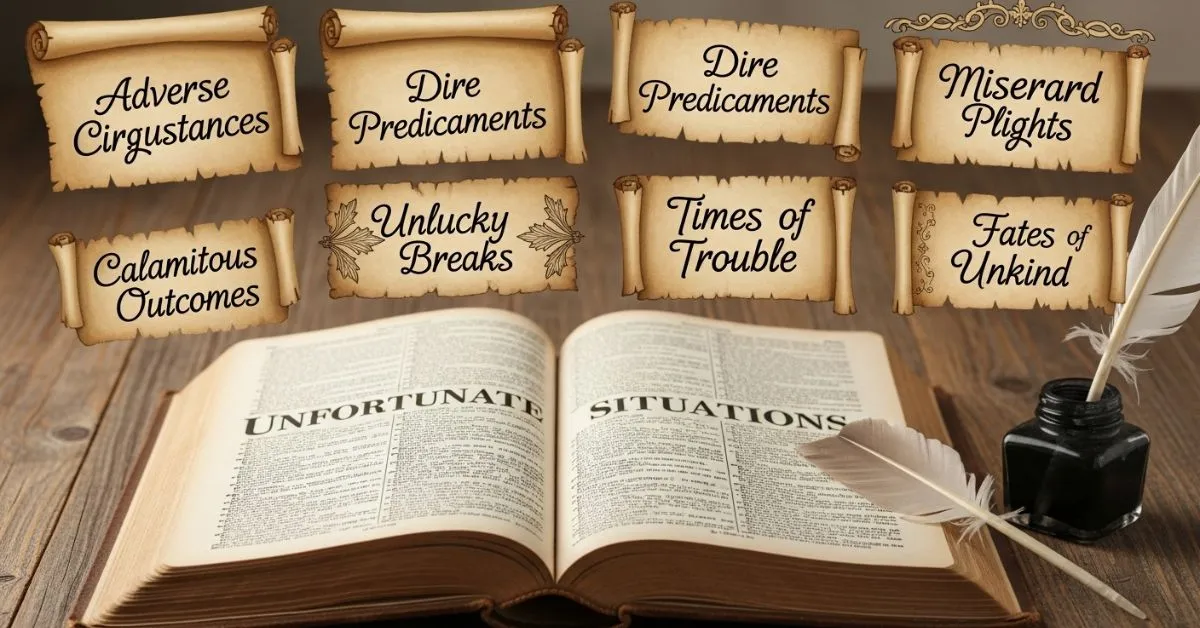
We all face hard days. Plans fail. Mistakes happen. Life throws curveballs. When we talk about these moments, the words we choose matter. Saying unfortunate situations again and again can feel dull, cold, or too formal.
What if you had better, softer, or even more creative ways to describe tough times?
In this guide, you’ll learn many another way to say unfortunate situations for different settings. Work. School. Friends. Social media. Even funny chats. You’ll get tons of examples you can use right away.
Let’s make your words more powerful and natural.
Professional Communication: Polite and Formal Alternatives
In the workplace, tone matters. You want to sound calm, respectful, and solution-focused. Here are strong alternatives you can use in emails, reports, or meetings.
- Challenging circumstances
- Difficult situation
- Unforeseen issue
- Unexpected setback
- Complicated matter
- Temporary difficulty
- Unfavorable outcome
- Adverse event
- Operational challenge
- Strategic hurdle
- Problematic development
- Unplanned disruption
- Business obstacle
- Critical concern
- Sensitive matter
- Project delay
- Resource limitation
- Risk factor
- Compliance issue
- Technical complication
- Market downturn
- Service interruption
- Policy conflict
- Financial strain
- Workflow disruption
These phrases help you stay calm and professional. They focus on facts, not drama.
Academic Writing: Formal and Analytical Expressions
In essays or research papers, you need precise and neutral language. Here are useful alternatives for academic work.
- Adverse conditions
- Negative implications
- Undesirable consequences
- Unintended outcomes
- Structural barriers
- Socioeconomic hardship
- Environmental stressors
- Policy limitations
- Systemic challenges
- Historical constraints
- Economic instability
- Social disadvantage
- Political unrest
- Ethical concerns
- Data limitations
- Cultural conflict
- Resource scarcity
- Public health crisis
- Legal complication
- Institutional weakness
- Demographic pressure
- Psychological strain
- Community disruption
- Infrastructure failure
- Behavioral risk factors
These phrases sound thoughtful and analytical.
Emotional and Supportive Tone: Gentle and Caring Phrases
When someone is hurting, your words should feel kind and warm. Here are softer options.
- Tough time
- Hard moment
- Rough patch
- Painful experience
- Heavy season
- Stormy phase
- Sad chapter
- Difficult journey
- Heartbreaking event
- Dark day
- Stressful period
- Life struggle
- Emotional setback
- Personal trial
- Unexpected pain
- Heavy burden
- Deep challenge
- Worrying situation
- Trying time
- Testing season
- Bitter experience
- Personal hardship
- Sudden shock
- Overwhelming moment
- Emotional blow
These phrases show empathy. They feel human.
Casual Conversations: Everyday Language
Talking with friends? Keep it simple and natural.
- Bad luck
- Tough break
- Messy situation
- Sticky spot
- Bad timing
- Bumpy ride
- Bad deal
- Not ideal
- Things went wrong
- Total mess
- Bit of drama
- Awkward moment
- Rough day
- Bad turn
- Wrong move
- Sloppy mistake
- chaotic chaos
- Big oops
- Real headache
- Bit of trouble
- Small disaster
- Weird problem
- Rough luck
- Major fail
- Not the best day
These feel real and relaxed.
Creative Writing: Dramatic and Descriptive Phrases
If you write stories, blogs, or poetry, vivid language matters.
- A twist of fate
- A cruel turn
- A shadowed path
- A broken chapter
- A shattered plan
- A sudden downfall
- A cracked foundation
- A fading hope
- A storm of trouble
- A dark cloud
- A bitter wind
- A falling star moment
- A crumbling dream
- A silent tragedy
- A bruised heart
- A wounded path
- A harsh awakening
- A trembling step
- A fading light
- A stormy horizon
- A tragic misstep
- A fractured future
- A sinking feeling
- A shattered illusion
- A heavy silence
These bring emotion to life.
Humor and Light Tone: Playful Alternatives
Sometimes humor helps. Here are fun ways to soften tough moments.
- Epic fail
- Plot twist
- Life glitch
- Oops moment
- Facepalm situation
- Murphy’s law in action
- Comedy of errors
- Hot mess
- Train wreck
- Dumpster fire
- Curveball from life
- Soap opera moment
- Total circus
- Chaos mode
- Drama alert
- Whoopsie
- Reality check
- Learning the hard way
- Not my finest hour
- A spicy disaster
- A chaotic masterpiece
- Life said nope
- One of those days
- Wild ride
- Cosmic joke
Use these carefully. Make sure the other person is okay with humor.
Short and Direct Options: Quick Substitutes
Need brief alternatives? Here you go.
- Hardship
- Setback
- Trouble
- Crisis
- Struggle
- Issue
- Problem
- Loss
- Misfortune
- Complication
- Delay
- Hurdle
- Conflict
- Risk
- Pressure
- Stress
- Disruption
- Failure
- Obstacle
- Challenge
- Shock
- Burden
- Concern
- Downturn
- Blow
Short words work well in headlines or quick replies.
Social Media Captions: Relatable Phrases
When posting online, tone is key. Try these:
- Not my day
- Lessons learned
- Growth season
- Life update
- Small setback
- Big comeback loading
- Plot twist again
- Character building moment
- Learning curve
- Reset mode
- Healing in progress
- Building resilience
- Rising stronger
- Tough but grateful
- Still standing
- Stronger than before
- One step at a time
- Rewriting my story
- Turning pain into power
- Temporary storm
- Leveling up
- Finding strength
- New chapter coming
- Growth through pain
- Bounce back time
These sound hopeful and modern.
Business Marketing: Positive Spin Language
Brands avoid negative tone. Here are smoother options.
- Market adjustment
- Performance dip
- Transitional phase
- Growth opportunity
- Service gap
- Quality concern
- Operational shift
- Customer challenge
- Supply disruption
- Strategic reset
- Improvement area
- Performance hurdle
- Development phase
- Industry pressure
- Demand fluctuation
- Revenue slowdown
- Brand recovery phase
- Adjustment period
- Competitive pressure
- Infrastructure update
- Pricing shift
- Market correction
- Scaling challenge
- Realignment phase
- Learning opportunity
These keep the focus on solutions.
Personal Development: Growth-Oriented Phrases
Turn pain into purpose with these alternatives.
- Growth challenge
- Character test
- Life lesson
- Refining moment
- Strength builder
- Faith test
- Mindset shift
- Personal evolution
- Turning point
- Resilience training
- Building grit
- Self discovery phase
- Wake up call
- Self improvement stage
- Confidence builder
- Patience practice
- Emotional growth
- Inner work season
- Transforming pain
- Power building phase
- Deep reflection time
- Self awareness journey
- Mind growth
- Skill sharpening
- Reinvention moment
These words empower instead of discourage.
News and Media Language: Neutral and Clear
Journalists often use neutral tone. Here are examples.
- Incident
- Event
- Occurrence
- Development
- Situation
- Crisis event
- Breaking issue
- Local disruption
- Regional concern
- Public incident
- Community impact
- Emergency case
- Service failure
- Legal matter
- Political challenge
- Economic shock
- Natural disaster
- Civil unrest
- Safety concern
- Infrastructure damage
- Traffic disruption
- Security breach
- Policy issue
- System failure
- Operational error
These feel factual and clear.
Parenting and Family Conversations: Gentle and Reassuring
When speaking to kids or family, use softer words.
- Little problem
- Small bump
- Tiny mistake
- Learning moment
- Fixable issue
- Oops day
- Tough day
- Try again moment
- Not our best day
- Small accident
- Big feeling moment
- Growing moment
- Practice time
- Mistake we can fix
- Bumpy day
- Hard choice
- Sad moment
- Sharing problem
- Family challenge
- Fix it together time
- Step back moment
- Calm down moment
- Think again time
- Big lesson day
- Try harder time
These reduce fear and build confidence.
Relationship Talk: Sensitive and Honest Language
When discussing relationship issues, tone is very important.
- Rough phase
- Emotional distance
- Communication gap
- Trust issue
- Hurt feelings
- Tense moment
- Unmet expectations
- Misunderstanding
- Tough conversation
- Growing pain
- Emotional strain
- Relationship hurdle
- Conflict moment
- Mixed feelings
- Unclear intentions
- Sad misunderstanding
- Stress between us
- Hard talk
- Fragile moment
- Broken trust moment
- Silent tension
- Deep hurt
- Shared struggle
- Healing phase
- Rebuilding time
These sound honest but not harsh.
Financial Context: Practical and Clear Terms
Money talk needs clarity.
- Financial setback
- Budget strain
- Income loss
- Expense surge
- Cash flow issue
- Debt pressure
- Revenue drop
- Investment loss
- Market decline
- Economic hardship
- Price increase
- Cost burden
- Payment delay
- Funding gap
- Credit issue
- Unexpected expense
- Financial challenge
- Budget shortfall
- Loan difficulty
- Tax burden
- Billing error
- Reduced profits
- Financial risk
- Monetary pressure
- Fiscal obstacle
Clear words build trust.
Everyday Quick Replies: Super Short Responses
When you need fast replies, try these:
- That’s tough
- Hard luck
- Not great
- That hurts
- Rough one
- Sad to hear
- Bad break
- Tough spot
- That’s rough
- Sorry to hear
- That’s heavy
- What a mess
- Ouch
- Yikes
- Oh no
- That’s tricky
- Not good
- That stings
- Tough call
- Big sigh
- Rough deal
- That’s stressful
- Tough moment
- Heavy stuff
- Not easy
Short. Simple. Human.
Tips for Using These Alternatives
Here are smart tips to use the right phrase at the right time:
1. Match the tone to the person.
Formal for work. Soft for emotions. Light for friends.
2. Avoid drama in serious settings.
Skip funny phrases in professional emails.
3. Stay solution-focused.
In work talk, use words that show progress.
4. Be kind first.
When someone is hurting, empathy matters more than vocabulary.
5. Keep it natural.
Choose words that fit your personality and voice.
Conclusion
Finding another way to say unfortunate situations helps you speak with more care, clarity, and confidence. Words shape how others feel. They can calm fear, show support, or even bring a smile.
Now you have hundreds of options for work, school, social media, family, and personal growth. The key is simple: match your words to the moment.
Which type of phrases do you use most formal, emotional, or funny? Try a few new ones today and notice the difference.

I am Mary Shelley, a passionate writer with 5 years of experience crafting engaging content. I specialize in English grammar and language tips, sharing insights and practical advice on my site, respnseto.com. My goal is to help readers improve their writing skills and communicate with clarity and confidence.